Controlled lowering near homes
When a drop zone is limited, we use ropes and rigging to lower limbs in sections so they do not swing into roofs, gutters, fences, or AC units.
Get safer limbs, healthier canopies, and a cleaner yard with professional pruning and tidy haul-off, scheduled around your property and access.
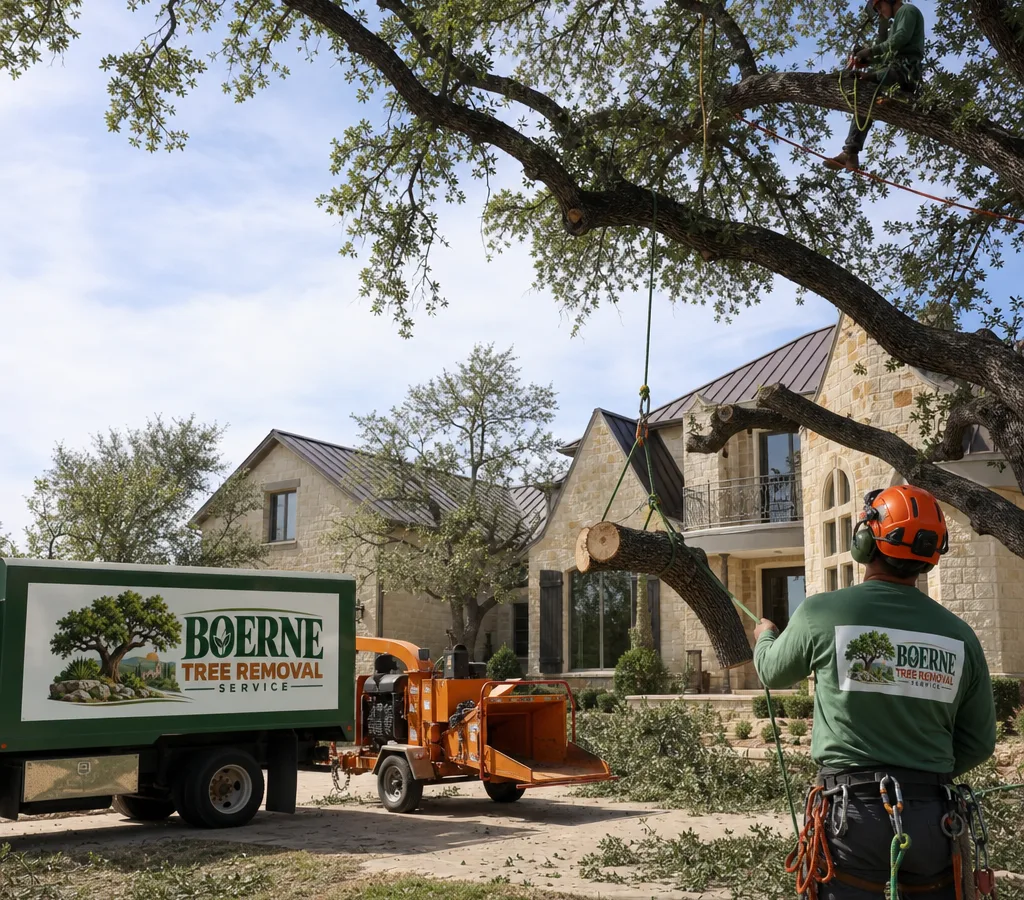
If you searched for tree trimming Boerne, you are probably dealing with one of the usual problems: limbs hanging over a roofline, branches rubbing each other in the canopy, a tree shading out grass, or deadwood that needs to come out before the next storm.
At Boerne Tree Removal Service, we trim trees with a focus on safety, structure, and plant health. That means clean cuts at the right spot, smart limb selection, and a plan for controlled lowering when anything could hit a home, fence, pool equipment, or vehicles.
Boerne sits in the Texas Hill Country, so we regularly work around limestone terrain, sloped lots, and tight access near patios and driveways. Many properties also have broad-crowned oaks and other natives that respond best to pruning done with restraint. When the goal is a safer yard, the answer is rarely heavy topping or random thinning. It is selective pruning that reduces risk while keeping the tree's natural shape.
If you are comparing providers, start with the basics: ask what pruning standard they follow (ANSI A300), how they will protect structures and landscaping, and what cleanup is included. You should expect clear communication on what gets cut, what stays, and why.
Tree trimming is not one single cut. It is a set of pruning decisions made around your goals and the tree's condition. Typical trimming work in Boerne, Texas includes:
On properties with mature oaks, we prioritize cut placement and restraint. Good pruning keeps the branch collar intact, avoids leaving long stubs, and limits removal so the tree is not shocked.
If your trees are close to overhead lines, treat that as a separate risk category. Only properly trained crews should work near energized conductors, and in many cases the utility corridor requires a different approach and coordination. During an on-site visit, we will tell you what is safe and what should be handled by the utility.
For a broader look at what our crews handle around Boerne, Boerne tree service can help you match the right crew and equipment to your property.
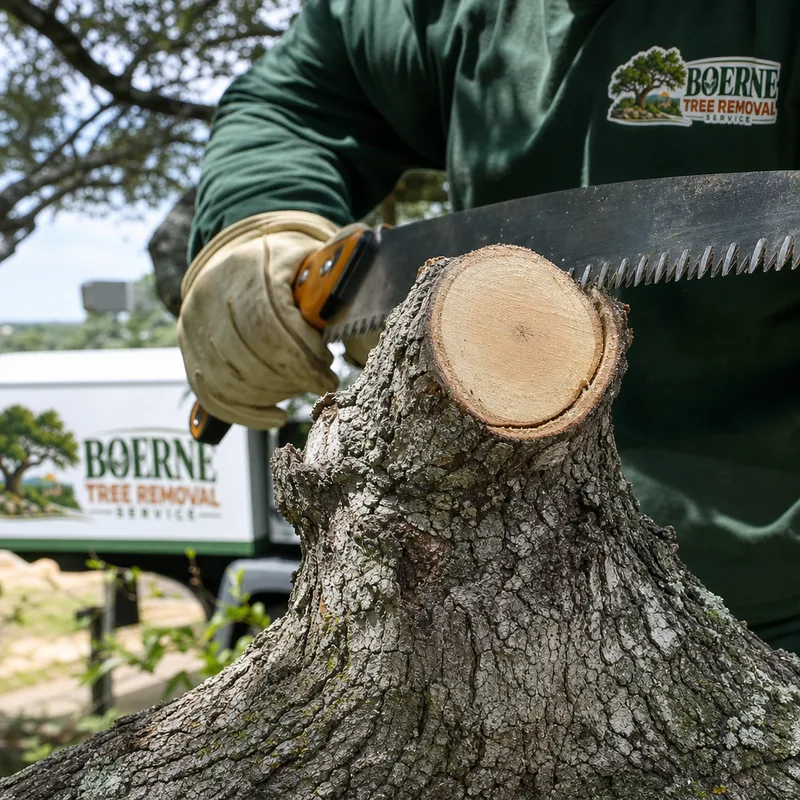
Every cut and every lowering plan is chosen around the tree, the targets below it, and the condition you want the property left in.
When a drop zone is limited, we use ropes and rigging to lower limbs in sections so they do not swing into roofs, gutters, fences, or AC units.
We follow accepted pruning practices such as ANSI A300, with cut placement that supports tree health and reduces decay risk.
You get a walk-through that spells out which limbs are being removed, what the finished clearance looks like, and any limits based on tree condition.
We avoid practices that create weak regrowth and long-term issues. If a tree truly needs major reduction, we explain options and realistic outcomes.
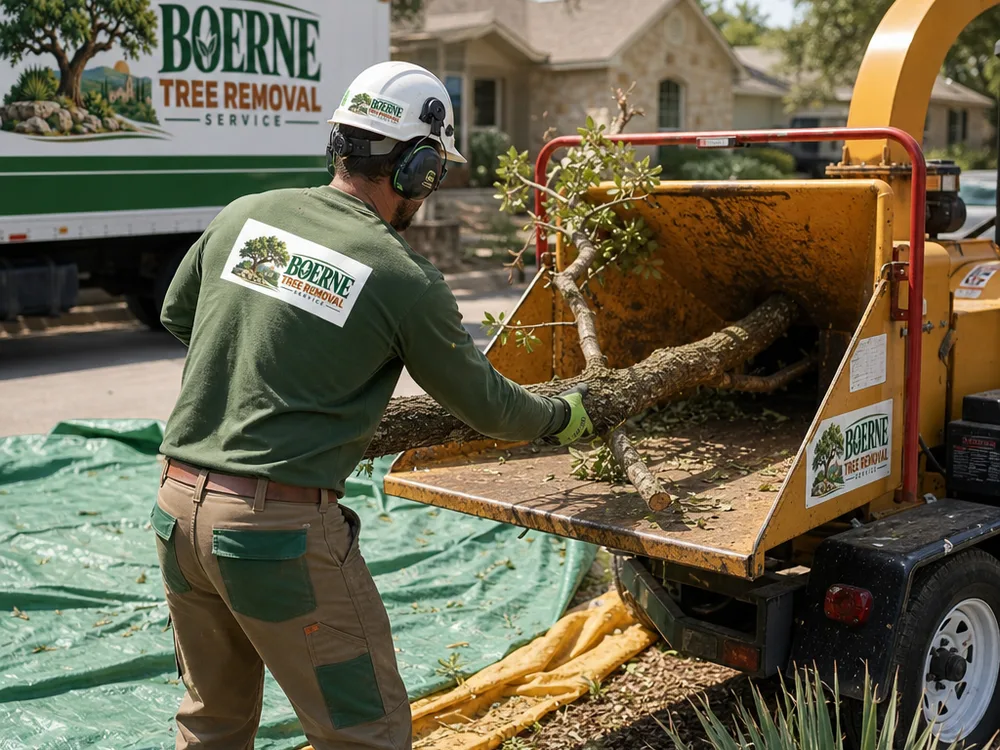
We chip brush, stack or haul wood as requested, and leave the work area clean enough that you are not spending your weekend raking.
Tree trimming in Boerne typically ranges from about $200 to $750 for a small to mid-size tree with straightforward access, while large mature trees or trimming that requires rigging near structures often runs $750 to $1,800+.
Your final price depends on tree height and canopy spread, how many cuts are needed, hazards such as rooflines, fences, and pools, access for equipment, debris volume, and whether disposal is included. Exact pricing is confirmed after an on-site assessment of the tree and work area.
A clear plan keeps the work safe, protects the property, and makes the finished result predictable.
We look at tree health, structure, targets below the canopy, and what you want to accomplish: clearance, risk reduction, shape, or light.
We outline what will be pruned and what will not, including how we will protect roofs, patios, and landscaping, plus where brush and wood will go.
We stage equipment, set drop zones where possible, and set rigging when pieces must be lowered. Vehicles and breakables are moved or protected.
We make proper pruning cuts, remove deadwood first, then complete the planned reduction, clearance, or cleaning. We avoid stripping the interior canopy.
Brush is chipped and hauled, sawdust is blown off hard surfaces, and we confirm the outcome matches the scope before we leave.
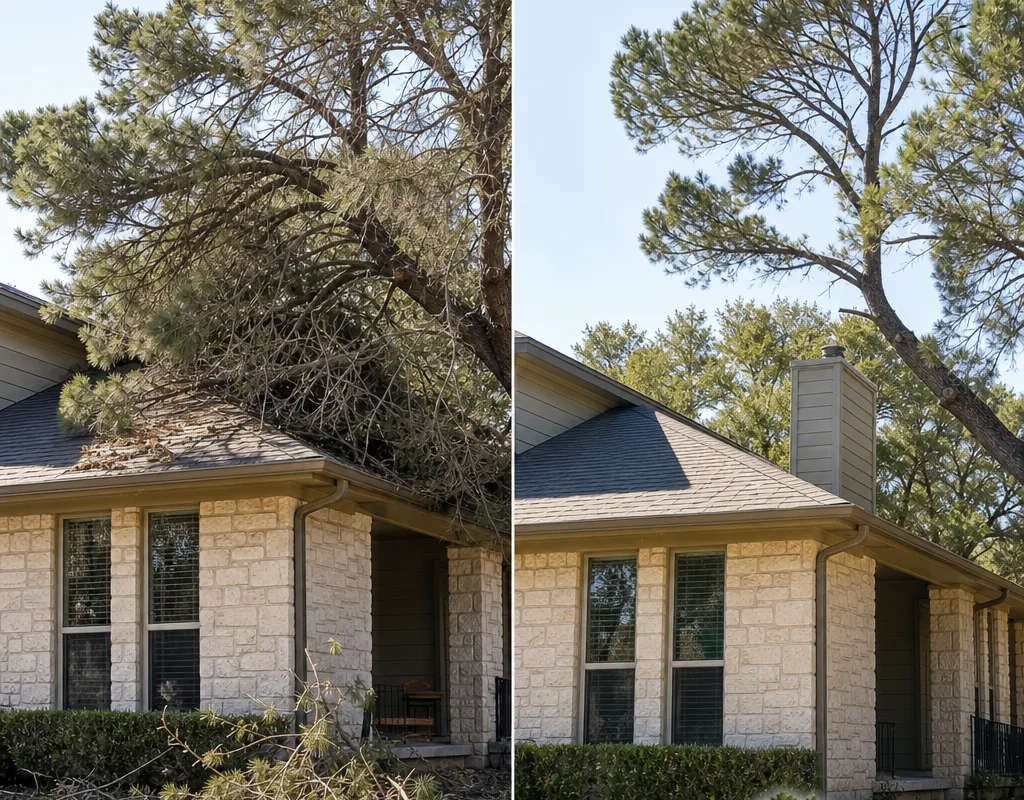
Most established landscape trees do well with a light inspection and targeted pruning every 2 to 4 years, with deadwood removed sooner if you see it. In Boerne's storm-prone seasons, it is smart to address weak attachments and over-extended limbs before they become a break hazard, especially over driveways and rooflines.
Yes, roofline clearance is one of the most common tree trimming jobs we do, and it is planned around controlled cuts and safe lowering if needed. We focus on reducing end weight and creating clearance without over-thinning the canopy, since aggressive thinning can increase wind load and sun stress.
Topping is usually a poor safety strategy because it creates large wounds and weak regrowth that can break later. A better approach is selective reduction cuts, crown cleaning, and structural pruning that lowers risk while keeping the tree's form and strength.
Yes, cleanup and disposal can be included, and we will confirm exactly what gets chipped, what gets hauled, and what, if anything, you want left on-site as firewood rounds. Access and debris volume affect the time and cost, so we review that during the visit.
Trimming near energized lines requires extra precautions and, in some situations, coordination with the utility that owns the lines. During the assessment we will identify clearance limits and tell you the safe path forward before any cutting begins.
Many single-tree trims take a few hours, while large canopies or multiple trees commonly take most of a day. The timeline depends on access for equipment, how much rigging is needed near structures, and the amount of debris to chip and haul.
Tell us what trees you are concerned about and what they are close to—roof, driveway, fence, pool, or lines. We will schedule an on-site look, outline the cuts that make sense, and leave you with a straightforward scope and cleanup plan.