Clear, job-specific plan
Before cutting starts, we confirm hazards, the intended drop zone, access points, and how each section will be handled so the work stays controlled.
If a tree is leaning, split, dead, or storm-damaged, it can fail without warning. We remove hazardous trees in Boerne with controlled rigging, careful drop zones, and full debris cleanup so you can make the property safe again.
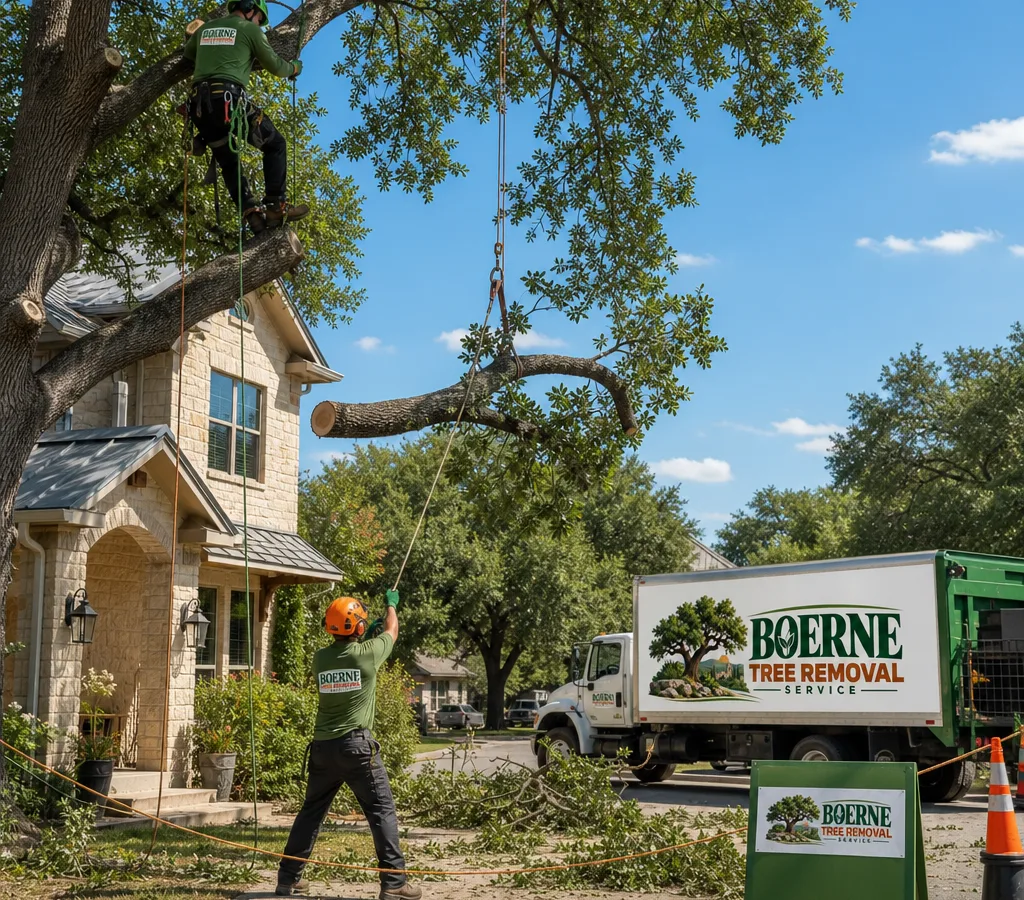
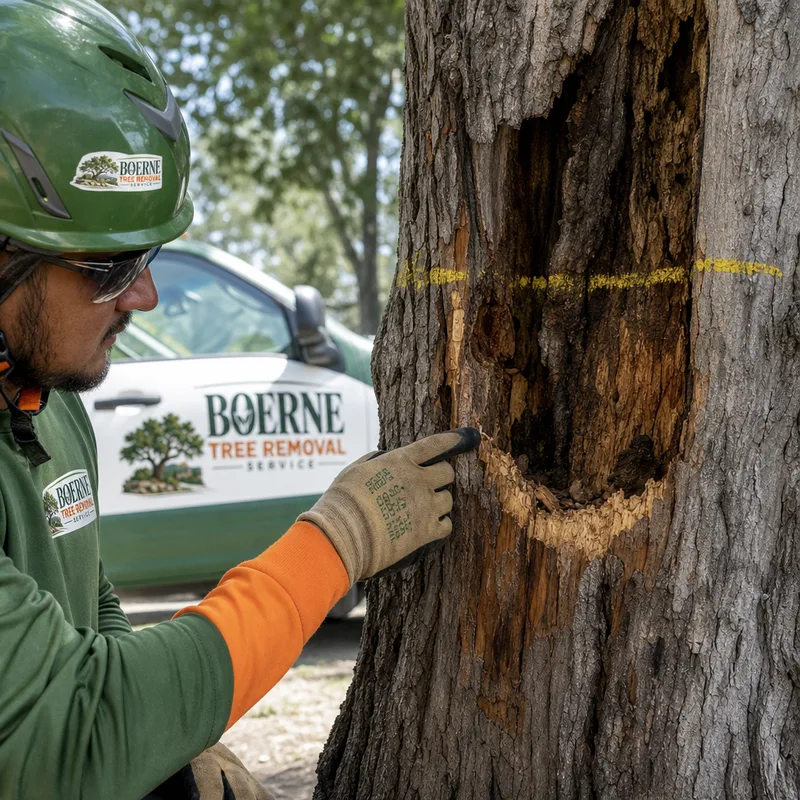
Hazardous tree removal is for trees that pose an immediate or likely risk to people, homes, vehicles, fences, or utilities. In the Hill Country around Boerne, wind events and saturated ground can turn a stressed tree into a problem fast.
Common warning signs we see on local properties:
If you are deciding whether a tree is truly hazardous, the safest approach is to keep people and vehicles out of the fall zone and get an on-site assessment. We can explain what we see, what can reasonably be removed safely, and what needs a different plan based on the tree's condition and the surroundings.
Hazardous trees are rarely a simple “cut and drop” job. The goal is to control every piece of wood from the first cut to the last.
On most hazardous tree removal projects in Boerne, we use a combination of:
We also plan for what can go wrong. Brittle deadwood, internal rot, and storm-torn hangers change how cuts are made and where the crew can safely stand. If utility lines are involved, the safest next step may require coordination with the utility provider before any work starts.
If you are comparing providers, start with a team that explains their plan in plain language: where the pieces will go, how they will be controlled, and what gets cleaned up at the end. You can also get a broader sense of what our crews do day to day through our Boerne tree service.
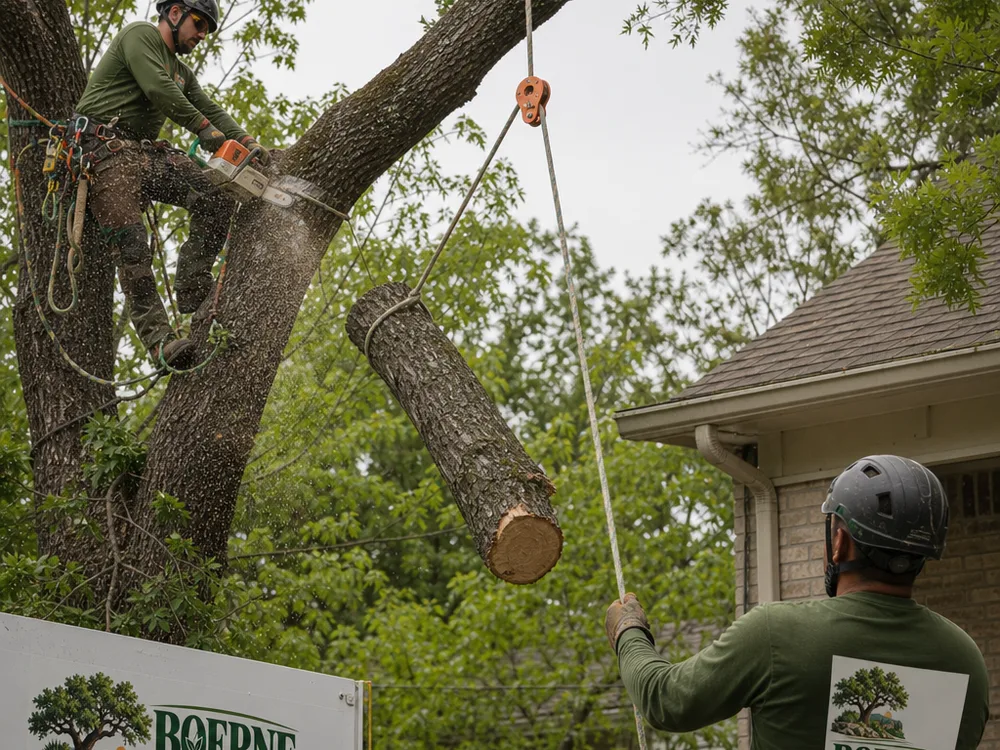
Every removal plan accounts for the tree’s condition, the targets below it, property access, and the cleanup required afterward.
Before cutting starts, we confirm hazards, the intended drop zone, access points, and how each section will be handled so the work stays controlled.
We account for roofs, fences, landscaping, and tight side yards, then choose sectional removal and rigging when free-falling wood is not appropriate.
When trees are actively threatening a driveway, entry, or home, we prioritize fast scheduling and practical steps to reduce risk until removal is complete.
Haul-off and cleanup are part of the scope, including limbs, brush, and cut sections, so you are not left with a hazardous mess afterward.
Hill Country terrain, narrow gates, and steep driveways change the setup. We plan equipment and labor around your property’s real access.
A deliberate sequence keeps the work zone controlled and the removal plan clear from assessment through the final walkthrough.
We look at lean, defects, decay indicators, overhead targets, and how close the tree is to structures. We also confirm where equipment can safely stage and where debris will exit the property.
You get a clear scope of what is being removed, what stays, what cleanup is included, and any constraints that affect timing or safety.
We establish an exclusion area, confirm the drop zone, and stage rigging so cut pieces are controlled. If the tree is near lines or other critical targets, we build extra margin into the setup.
The tree is dismantled in a safe order, typically top-down, with rigging used as needed to prevent impact damage. Cuts and tie-in points are chosen based on sound wood and stability.
We haul off debris per the agreed scope and walk the area with you to confirm the site is left in a safe, usable condition.
Hazardous tree removal in Boerne typically ranges from about $450 to $1,800+, with complex removals near structures or requiring extensive rigging sometimes reaching $2,500 to $5,000+ depending on size and access. A small dead tree in an open area is usually on the lower end, while large, compromised trees over roofs, fences, or driveways cost more.
Price changes with trunk diameter and height, lean and defects, proximity to targets, crew and equipment needs, gate width and terrain, and how much debris hauling is included. The exact cost is confirmed after an on-site inspection so the plan matches the real conditions.
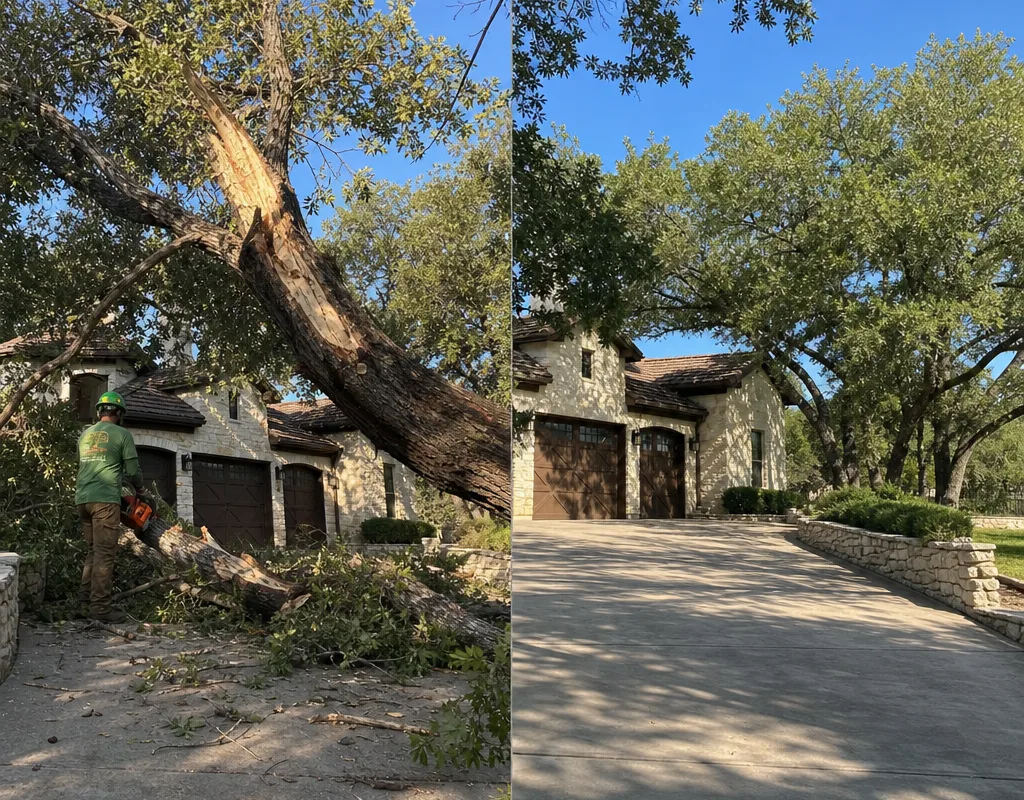
For active hazards, scheduling is typically prioritized as quickly as conditions allow, especially after storms when failures are more likely. Timing depends on crew availability, site access, and whether the tree is tangled in other trees or near utilities, since those situations require extra planning to keep the removal controlled.
It is an emergency when the tree or a major limb is already down on a structure, blocking access, hanging overhead, or showing fresh movement such as ongoing splitting or root lift. A dead or declining tree that is stable and not over a target may be scheduled normally, but it should still be evaluated because deadwood can fail unpredictably in wind.
Yes, but it is usually done by sectional dismantling with rigging rather than free-falling the tree. The removal plan focuses on controlling each piece away from the roofline and keeping people out of the fall zone, with the final approach based on the tree's sound wood, lean direction, and available tie-in points.
Yes, full debris cleanup and haul-off are typically included in the scope you approve, covering limbs, brush, and cut sections from the removal area. If you want to keep usable wood on-site, that can be discussed during the estimate so it is handled safely and placed where you want it.
If a tree is contacting or threatening overhead lines, the safest next step may involve coordination with the utility provider before cutting starts. Keep everyone away from the area and do not attempt to move limbs yourself; an on-site assessment can confirm what can be removed safely and what requires utility involvement.
Hazardous tree removal focuses on making the tree safe by removing it; stump removal is a separate scope because it requires different equipment and time on site. If you want the stump addressed, bring it up during the estimate so the work can be planned and priced correctly.
Tell us what is happening on your property in Boerne and when you noticed it. Boerne Tree Removal Service will inspect the tree, explain the safest removal plan for your situation, and schedule the work with cleanup included.