Trees on roofs, garages, and sheds
Controlled sectional removal to reduce weight and movement on the structure before the main trunk is handled.
When a tree fails after wind, lightning, or a sudden split, fast action matters. Our local crew responds quickly to remove hazards, protect your home, and clear access safely.
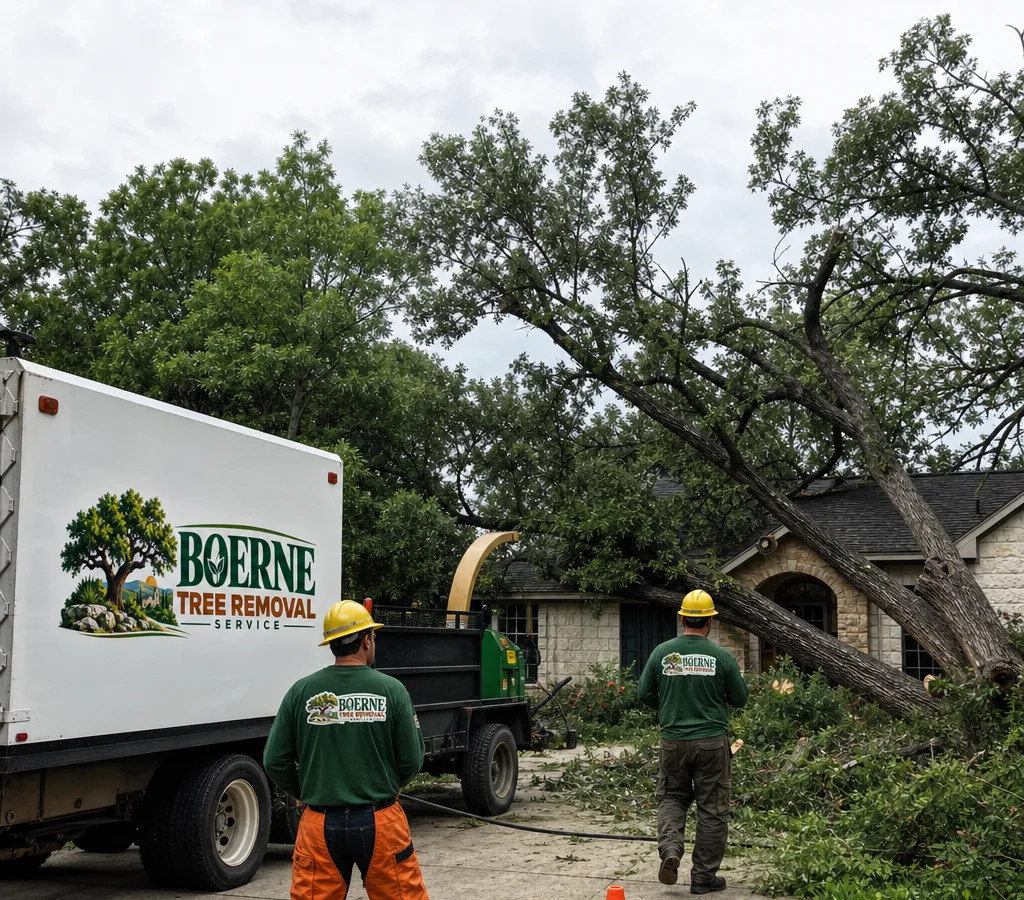
Emergency tree removal is for situations where a tree or large limb has become an immediate hazard: it is on a house, blocking a driveway, hanging over a roofline, tangled in a fence, or split and unstable after a storm. In those moments, the goal is simple: reduce risk first, then remove the wood in a controlled way.
Boerne weather can turn quickly, and Hill Country properties often have mature trees close to structures. When a failure happens, you want a crew that can assess what is still under load, set a safe work zone, and take the tree down in pieces so it does not cause more damage.
Boerne Tree Removal Service focuses on urgent removals and hazard mitigation. We prioritize life safety, protect the structure as we work, and leave the area stable and passable. For a broader overview of what we do year-round, including non-emergency work, you can see our tree removal service.
Compromised trees require a plan built around what the tree is touching, what remains under load, and how access can be restored safely.
Controlled sectional removal to reduce weight and movement on the structure before the main trunk is handled.
Stabilization and staged cutting when the root plate is lifted and the trunk is under tension.
Removal of suspended wood and broken tops that can drop without warning, especially after wind gusts.
Rapid clearing so vehicles can get through, with cleanup sized to what is necessary for safe access.
Careful rigging and lowering when space is tight and there is limited room to fell safely.
We remove debris created by the emergency event as part of the hazard mitigation scope so the property is usable again.
Emergency tree work is different from routine removals because the tree is already compromised. The safest path is almost never to push it over. It is usually to take it apart under control.
A good emergency assessment looks for:
Our crew sets a work zone, identifies the safest drop area, and uses proven methods like sectional dismantling, rigging and lowering, and controlled cuts that account for compression and tension. If a tree is resting on a structure, we focus on relieving weight in small steps so the building is not shocked by a sudden shift.
If a limb is in contact with a power line or you see arcing, treat it as a utility emergency and keep everyone away. In those cases, we coordinate our work around clearance once the line hazard is addressed.
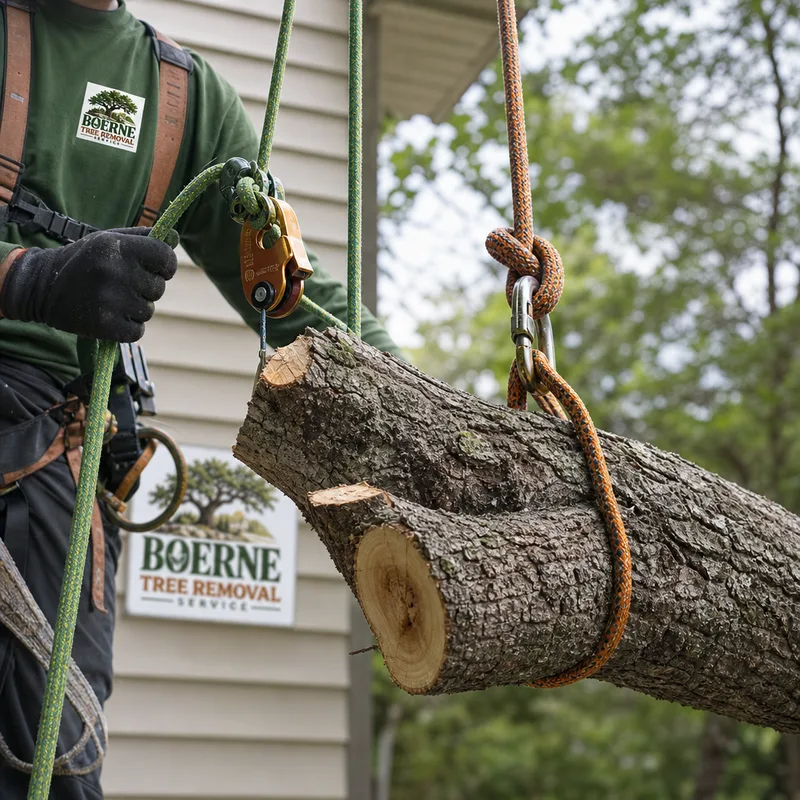
A clear sequence helps us prioritize the immediate hazard, protect the property, and restore safe access.
You describe what happened and what the tree is affecting (roof, driveway, fence, vehicle). We prioritize the highest-risk situations first and plan access for trucks and equipment.
We check stability, lean, cracks, suspended limbs, and what the tree is touching. The first goal is to make the area safe for people and pets.
You get a straightforward plan: what is coming down now, what can wait, and how we will protect nearby structures during removal.
We dismantle and lower sections as needed, then cut and move material to restore safe access and reduce immediate risk.
We clear the hazard debris included in the scope and walk the site with you. If additional non-urgent work is recommended, you can schedule it separately.
Emergency tree removal in Boerne typically ranges from about $500 to $2,500+, with complex, high-risk jobs—trees on structures, heavy rigging, or limited access—sometimes running higher. A straightforward removal of a downed tree that is already on the ground and easy to reach often costs less than a split, leaning tree that must be dismantled in sections.
Final pricing depends on tree size and species, what it is resting on, equipment needs, access, disposal volume, and after-hours urgency. The exact cost is confirmed after an on-site hazard assessment and a written scope.
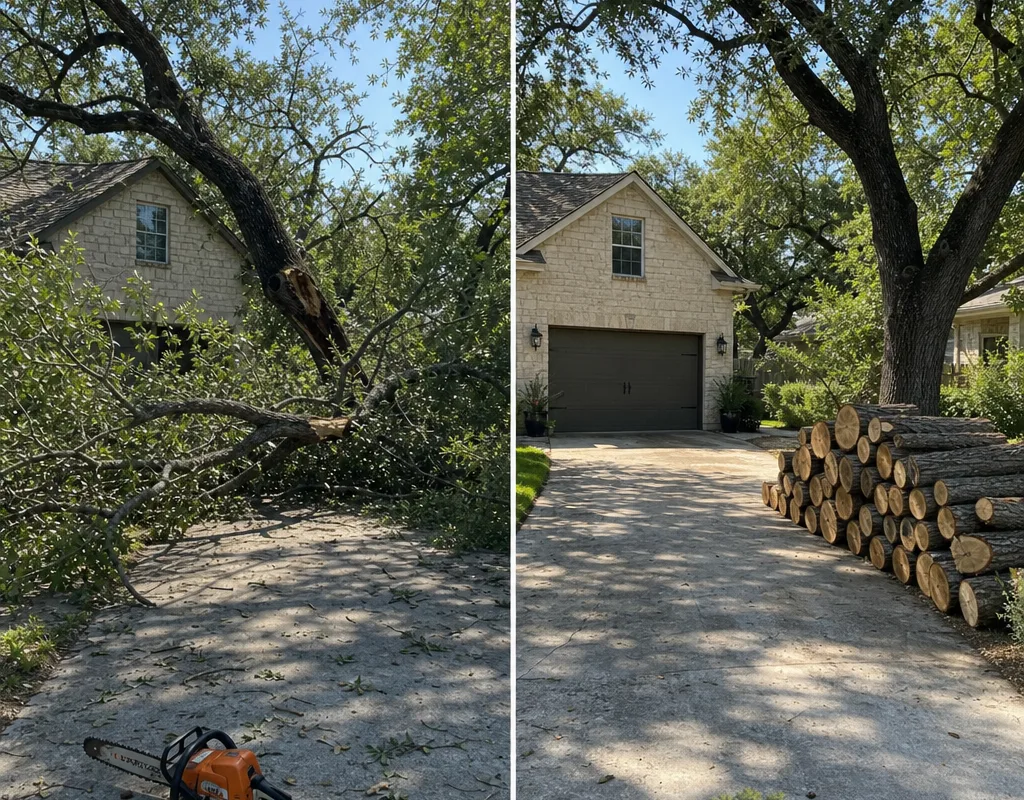
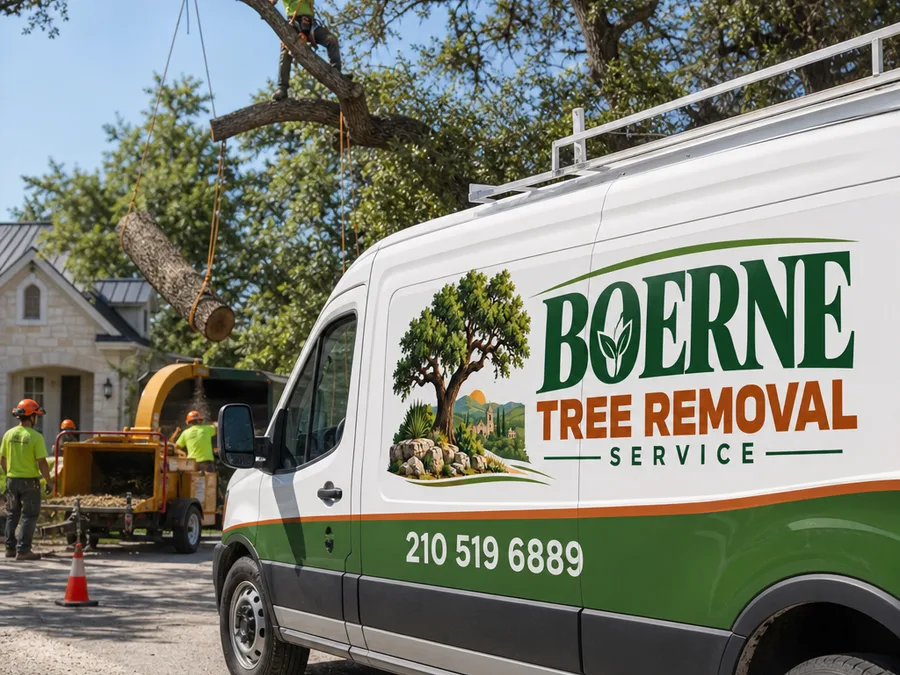
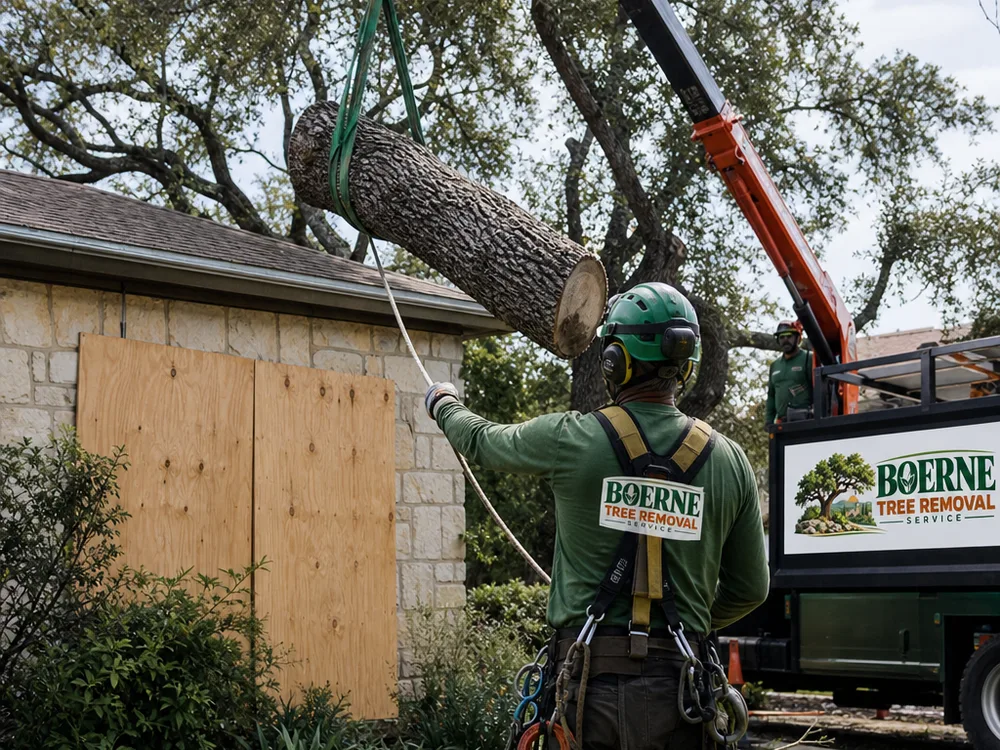
If a damaged tree is threatening a roof, blocking access, or hanging over an area you need to use, get a quick on-site assessment so you know what is safe to remove now and what can wait.
Response time depends on storm demand and the hazard level, but we prioritize situations where a tree is on a structure, blocking access, or actively unstable. When you reach out, share what the tree is contacting (roof, vehicle, fence) and whether any limbs are hanging, so we can triage accurately.
Keep people and pets away from the tree, avoid standing under hanging limbs, and do not try to cut wood that is under tension or resting on a structure. If you suspect contact with overhead power lines, stay back and treat it as a utility hazard until the line is confirmed safe.
Yes, the standard approach is controlled, sectional removal to relieve weight gradually rather than pulling or pushing the tree off. We cut and lower pieces in a sequence that limits shifting, then address the trunk and any remaining hang-ups once the structure is no longer loaded.
Yes, cleanup is typically part of the emergency scope for the hazardous debris created by the failure, especially when it is blocking driveways, entries, or creating unsafe piles. If you want additional hauling, full yard restoration, or non-urgent debris removal beyond the hazard area, that can be quoted as an add-on.
Either option can work, and it is decided in the scope before work begins. Many homeowners prefer hauling for speed and access, while others want manageable rounds or chips left on-site if space allows and it does not interfere with safety.
Yes, emergency work often costs more because the tree is compromised, the risk is higher, and the job can require more rigging, more labor, and after-hours scheduling. A tree that is already on the ground and easy to access is usually much less involved than a split trunk leaning over a roof.
Tell us what happened and what the tree is contacting. We will confirm the safest next step, provide a clear scope, and move quickly to reduce the hazard on your Boerne property.